Saturday, July 6, 2013

Snow in Venezuela? Or Snowden in Venezuela?

Snow in Venezuela? Or Snowden in Venezuela? 

You might know be aware of this, but in Venezuela, a tropical country, very close to the Equator Line, sometimes it is possible to see snow (even touch it) and..., apparently Venezuela will also have Snowden. Yes, Edward Snowden. The famous or rather infamous “whistle-blower”.


Some UiB people (incredible, eh?!) at the Bolívar Peak (about 5,000 mts above sea level).

As I write this entry rumors in the national press and other mass media point out to the fact that Snowden could be granted asylum in Venezuela as it is considered by the government that the crimes he is charged by the United States are of a "political nature". Those charges include theft of government property and unauthorized communication of national defense information.

The right of asylum is an institution of Public International Law that has been enshrined in several international instruments, which can be binding or not for a State, depending if the same as ratified it or not.

Edward Snowden

The Universal Declaration of Human Rights, an international instrument that is not binding*, but rather a declarative document, states in its article 14:

"(1) Everyone has the right to seek and to enjoy in other countries asylum from persecution. (2) This right may not be invoked in the case of prosecutions genuinely arising from non-political crimes or from acts contrary to the purposes and principles of the United Nations".

Also, other international instruments that regulate the institution of asylum, on a worldwide scale, are The United Nations 1951 Convention Relating to the Status of Refugees and the 1967 Protocol Relating to the Status of Refugees. The applicability of these instruments to the present case is something I have doubts about, but, again, I am not an expert on HHRR law, so please let me know whether they would apply or not!

Venezuelan government, however, is offering Snowden a different kind of asylum to that protected under the mentioned conventions. The kind of asylum that is being offered is a diplomatic asylum.

The figure of political asylum is a typical institution of Latin American Public International Law and protected under the San José Pact, the American Convention on Human Rights, to which Venezuela declared its renounce on September 10, 2012 and which will enter into force in Septermber 2013 (see http://www.oas.org/dil/treaties_B-32_American_Convention_on_Human_Rights_sign.htm#Venezuela), which states in its article 22.7:

"Every person has the right to seek and be granted asylum in a foreign territory, in accordance with the legislation of the state and international conventions, in the event he is being pursued for political offenses or related common crimes".

It seems, then, that the Venezuelan government is in its right to offer asylum to Snowden in case the crimes that are being charged to him by the US prosecutor are of a political nature (in this case they seem to be). 

However, what will be the price of such granting of asylum (in case it is finally granted)? Is the US legally and/or morally allowed to retaliate against Venezuela or another country that decides to grant asylum to Snowden? Or how contradictory is the fact that Venezuela, a country that violates human rights and has denounce a human rights international treaty (the one upon which it will rely to claim its right to offer the asylum) is offering its protection to appear as a "savior of human rights"?

I leave the analysis up to you.

If the Snowden case finally resolves, I will make sure to update this post with further news.

Until then.

* I am aware that other people can have other opinions concerning the binding power of the Declaration, but that it is out the scope of this short blog entry.

Thursday, July 4, 2013

On the way to Helsinki or... how to show your work as a research fellow

On the way to Helsinki or... how to show your work as a research fellow

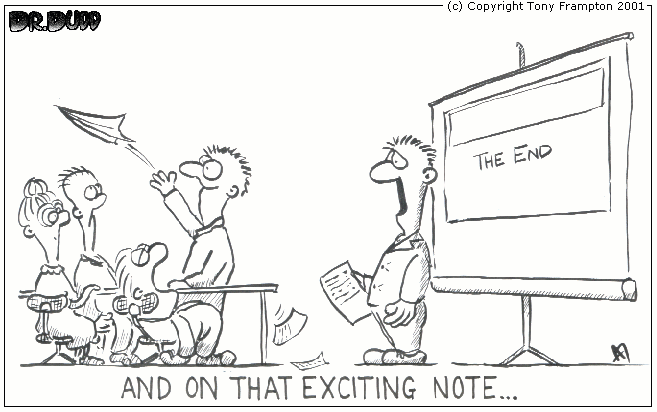
The Nordic Meeting of Researchers in Competition Law Helsinki will be taking place from the 3rd to the 4th of October and I am very much looking forward to participating in it. Unlike most the events I have attended in the past year I will be one of the “performers” and not a mere spectator. In Helsinki I will be presenting in front of other Nordic PhD candidates and professors in competition law part of my research project. It is an interesting challenge and somewhat a compromise in which you have to balance the fear of failure with the excitement of spreading what you are working it.

The “cultural differences”

Different people have different presentation styles and skills. And as a non-Nordic speaker I have a lot of different traits from the ones I have observed in my time in Bergen. Something among the lines of “Lost in Academic Translation”.

It has turned out to be a surprise to me when I observe the presentations at the UiB; they are very well prepared, with plenty of intricate details (sometimes difficult for the audience to grasp if not educated in the field) and most of the team are read speeches with usually little to no visual aids, think of a .ppt presentation.


This was and still is a surprise to me. In my years as a student in Venezuela, Austria and other places I have attended seminars/competitions, etc, the rule of thumb is: do have visual aid (plenty if possible) and do not read from a piece of paper. In fact, I remember a course I had during my LLM in which reading caused automatic failure of the subject.

The “business man presentation”

My colleagues have told me that they find my presentation “North-Americanized” and not so European because of the business oriented approach when making a presentation. Let me elaborate a bit further on this.

I tend to prepare my presentations and make them as lively as possible. Think about a lot of gestures, walking around. I try to be dynamic, fast paced and motivated. I want people to listen to me and to do so I try to give them a “good show”.

Also, I refrain from making a topic extremely complicated; rather I aim towards making it accessible to the audience. This can be seen by others as making a rather simplistic presentation (a risk you can run) but by non-experts is easier to get interested in the talk.

As another general rule of thumb I usually initiate the talk with a line that usually causes either surprise or controversy. It is necessary, however, to be careful, because this can generate rejection to the content of your message or people can get with their mind just anchored on that issue.

The challenge

In Helsinki I will be presenting part of my on-going research project on the regulation of buyer power and monopsony in public procurement. Not only I have to prepare a talk, but I must prepare a talk keeping in my that the audience are those researchers I base my work on! Basically, I need to do a good presentation to “sell” my project and get some very much needed feedback. Maybe it is time for me to make a more “Nordic” presentation rather than a “business-like” one?

What do you think?


Monday, July 1, 2013

20 days, 4 countries and 10,000 miles or 20天,4个国家和10000英里


20 days, 4 countries and 10,000 miles or
20天,4个国家和10000英里

Europe!


The last 20 days have been crazy. I have been to Belgium, The Netherlands, Norway and China and back again. When I entered the PhD program I assumed that there will be some travelling, but this has proven to be very intense and there is still quite a lot of travelling ahead!

Brussels and Maastricht proved to be a 10 day intense research visit to dig into European Competition and Public Procurement Law. The visit to the EU Commission’s Library proved to be very helpful in finding interesting literature that would have been difficult to get somewhere else – their catalogue is pretty impressive and has plenty of material in different languages.  But even better, I was able to meet some good friends and have very good food and beer in Brussels (wow, that Belgium beer is good stuff).

Maastricht was an interesting experience. Were 2 very intensive days of pure public procurement surrounded by a beautiful city, interesting talks and very experienced professionals. The seminar organized by EIPA on the recent developments of PP and its case law was not only interesting, but also very helpful to get a crash course of the latest news and to get a good idea of how the upcoming PP Directives will look like. Rumors point out that they will be enacted by the end of October 2013. Let’s see if that happens and what they will look like in the end.

China!


Then, after just 5 days in Norway it was time to grab a plane and visit Shanghai and Beijing. Wow, what a change. From cold and rainy Bergen to very hot, very humid and sometimes extremely rainy Shanghai and later to a very dry, but not that hot Beijing. What a trip!


In Shanghai we had a very interesting workshop/seminar with professors from the University of Fudan mainly dealing with Chinese legal culture and some comparative reflections to our PhD research projects. On our free time we had the chance to visit a multicultural city that truly demonstrates the change of China in less than 25 years. From rural China to a cosmopolitan top of the art modern city. Shanghai is a city of contrasts and neon lights.

On the other hand if Shanghai is the most westernized version of China, Beijing represents the most traditional and politically linked city in the country. Seat to the Forbidden City and the Tomb of Chairman Mao, Beijing is the center of decision making of this world leader. In Beijing we had the chance to visit the University of Renmin and participate at a round table with other PhD and Post-doc students. I had the privilege to do a 20 mins presentation on my project: Buyer Power, Competition Law and Public Procurement that met an interested audience (much to my surprise!).

To wrap up a very long post: I am exhausted of travelling, but this experience has been enriching and interesting to say the least and the contrast between the East and the West is sometimes even bigger than we can imagine, but also can be much smaller than expected. It is all about perception.

直到不久!