Visiting the Walter Eucken Institut: Ordoliberalism
Since early November 2014 I have
had the opportunity to visit the Walter Eucken Institut to do research on the
Freiburg School of Law and Economics: Ordoliberalism.
 Ordoliberalism – also known as
German Neo-Liberalism - is a school of economic (and legal) thought that
was born in Germany in the decade of 1930 and influenced its economic
development after the WWII. This was partially carried out due to the influence of first Minister of Economy and then Chancellor Erhard, who proposed following ordoliberal ideas as the basis for the “German Economic Miracle” and the concept of
Social Market Economy.
Ordoliberalism – also known as
German Neo-Liberalism - is a school of economic (and legal) thought that
was born in Germany in the decade of 1930 and influenced its economic
development after the WWII. This was partially carried out due to the influence of first Minister of Economy and then Chancellor Erhard, who proposed following ordoliberal ideas as the basis for the “German Economic Miracle” and the concept of
Social Market Economy.  Ordoliberalism proposes a third way between, on the one
hand, traditional liberalism and absolute market freedom and, on the other
hand, state planned economy. To do, it suggest adopting a set of (legal)
rules that will guide the economic behavior of individuals in the market to
produce an outcome close to the economic ideal. This set of rules will foster
individual economic freedom, growth and stability. For ordoliberalism the competitive
process should be guiding mechanism of economic exchanges. Because of this, proper competition should be protected be preventing undertakings from "cheating the rules" economic efficiency follows. Consequently, it is the role of the state to set
the rules and ensure that economic parties comply with them by acting as
an investigator and judge. The state, thus, acts as a “market police”, through
the competition authority, to ensure the respect of competition law.
Ordoliberalism proposes a third way between, on the one
hand, traditional liberalism and absolute market freedom and, on the other
hand, state planned economy. To do, it suggest adopting a set of (legal)
rules that will guide the economic behavior of individuals in the market to
produce an outcome close to the economic ideal. This set of rules will foster
individual economic freedom, growth and stability. For ordoliberalism the competitive
process should be guiding mechanism of economic exchanges. Because of this, proper competition should be protected be preventing undertakings from "cheating the rules" economic efficiency follows. Consequently, it is the role of the state to set
the rules and ensure that economic parties comply with them by acting as
an investigator and judge. The state, thus, acts as a “market police”, through
the competition authority, to ensure the respect of competition law.
Ordoliberalism is of great interest
to me because I employ this economic theory to develop an analytical framework
to discuss what ought to be the regulation of buyer power in EU competition and public procurement law. Not only do I agree in a personal level with many of its postulates, but also because ordoliberalism proposes limiting market power from both the public and private sector in a holistic manner, which serves my purpose of regulating buyer power in both public and private markets.
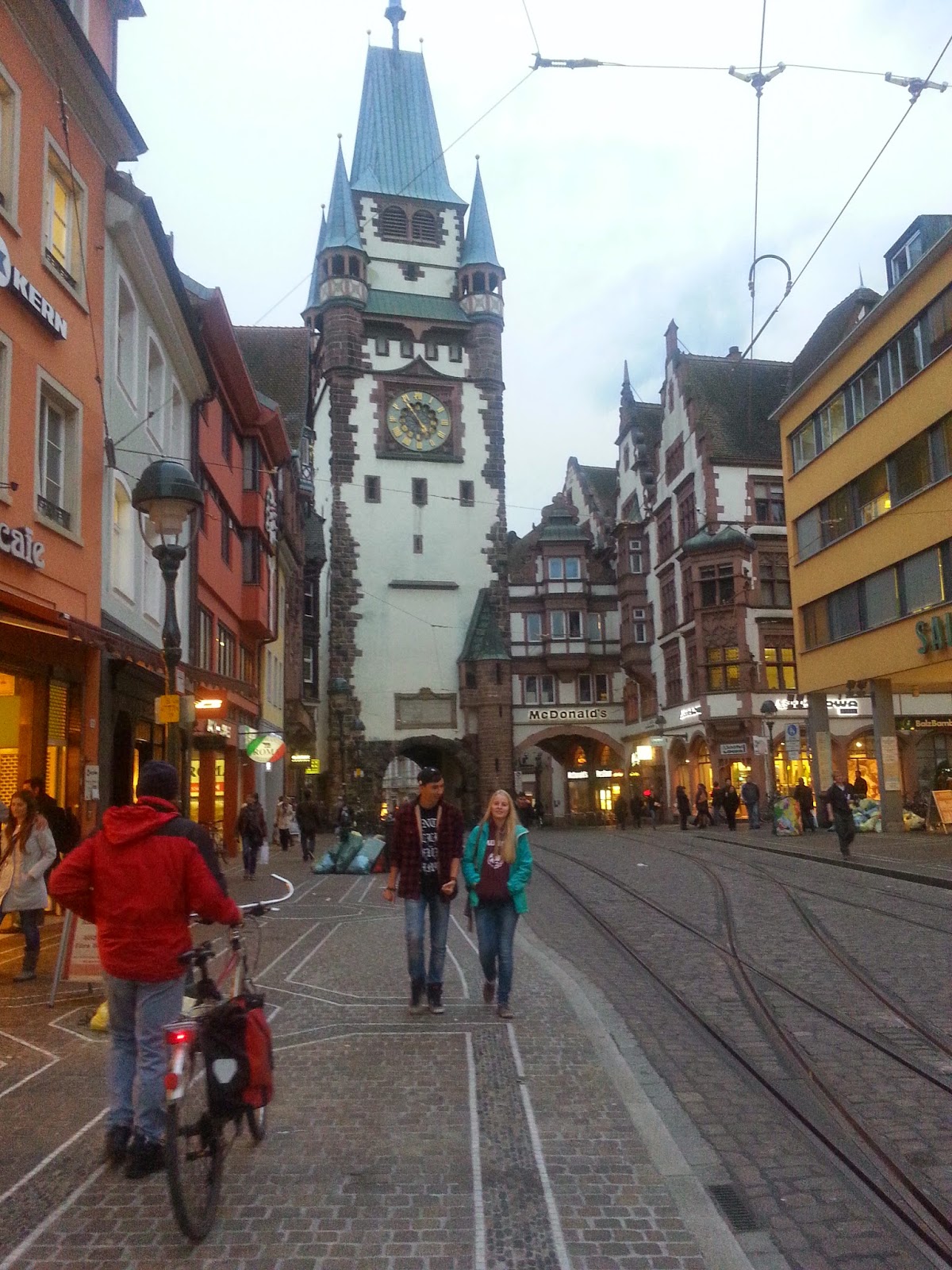 In these already 2 months I have
been in Freiburg I have been able to familiarize with this trend of economic
thought, reflect on it and understand what implications it has for the
regulation of buyer power in competition law. It has been a fascinating task
that transported me from the world of competition law and competition
microeconomics to a broader level of speech in macroeconomics and constitutional economics (the
ordoliberals, at least the founding fathers, were/are not microeconomists).
Also, not only I have been able to live in Freiburg (a nice university city)
but also meet friendly, interesting and very well prepared scholars. To all the
team at the Walter Eucken Institut: Vielen Dank!
In these already 2 months I have
been in Freiburg I have been able to familiarize with this trend of economic
thought, reflect on it and understand what implications it has for the
regulation of buyer power in competition law. It has been a fascinating task
that transported me from the world of competition law and competition
microeconomics to a broader level of speech in macroeconomics and constitutional economics (the
ordoliberals, at least the founding fathers, were/are not microeconomists).
Also, not only I have been able to live in Freiburg (a nice university city)
but also meet friendly, interesting and very well prepared scholars. To all the
team at the Walter Eucken Institut: Vielen Dank!
If you are interested to know a bit
more about my stand on ordoliberalism and buyer power, do contact me by email!


